Monday, August 9, 2010

Woods Rogers Opens Charlottesville Office

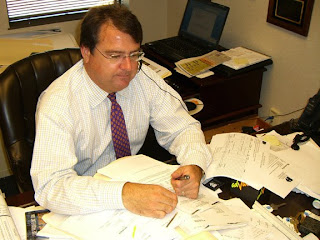
Roanoke-based Woods Rogers, a law firm serving businesses and individuals across Virginia and elsewhere since 1893, is expanding to a new office in Charlottesville. The office, at 100 Tenth St., Suite 303, is led by partner Russell T. (“Rusty”) Schundler (right), a former Roanoke-based Woods Rogers attorney whose practice areas include mergers and acquisitions, securities and corporate finance.

Schundler returns to Woods Rogers after practicing the last three years at McGuire Woods in Charlottesville, and joins W. McIlwaine (“Mac”) Thompson, Jr. and Peter E. Rosden, who also are with Woods Rogers in Charlottesville. Schundler has represented businesses in a wide range of industries on transactions from formation through exit, including mergers and acquisitions, bank financings, contract negotiation, and formation and finance of start-up entities. He has also worked with private equity funds, venture capital funds and hedge funds with formation, offerings of interests to investors, and the review and negotiation of investments. Schundler practiced with Woods Rogers between 2001-2007. He is a 2001 graduate of the University of Virginia School of Law and also has a bachelor’s degree from UVa.

Active in the community, Schundler serves as a director for Jefferson Area CHIP, Inc., a director for the Charlottesville Business Innovation Council, and as a director for WorkSource Enterprises. With the expansion of its Charlottesville presence, the Roanoke-based firm is now able to offer clients in central Virginia a wide array of services and resources from its three other locations in Roanoke, Richmond and Danville.

Friday, August 6, 2010

Valley Computer Showroom Opens

Left to right: Alice Stoddard, Bill Jones, Kevin Boggess, Lisa Garst, Bill Wills, Deborah Goodwin, Rose Wills, Randy Foley

Valley Computer Service and Sales has opened its new showroom on East 4th Street in Salem.

Members of the community and the Chamber of Commerce joined owners, Bob and Rose Wills to celebrate the grand opening this week.

Clark Nexsen's New Office LEED Certified

Clark Nexsen's Roanoke lobby.^

Main work area at the renovated Clark Nexsen.^

The office renovation at Clark Nexsen, an architecture, engineering, interior design, planning, and landscape architecture firm in Roanoke has earned LEED-CI Certification through the U.S. Green Building Council (USGBC).

The project combined the existing Clark Nexsen office with two adjacent office suites, creating a single space for the growing Roanoke office. Up-fitting space in a 1970’s-era high-rise posed several challenges, including working with dated HVAC and electrical systems. To achieve LEED Certification the project team used several design strategies to be energy efficient and environmentally responsible.

Strategies included specifying energy efficient light fixtures, providing individual task lamps at each workstation, maximizing the available natural daylight, and providing views to the outside from every workstation. EnergyStar rated appliances and office equipment where used whenever possible.

To assure high indoor air quality, the team used low-VOC construction materials including: no-VOC paints and adhesives, no added urea-formaldehyde wood products, and low-VOC carpet. The new furniture systems are cradle-to-cradle GREENGUARD certified.

To reduce the use of virgin materials in the construction of the project, the team specified recycled carpet tiles and other products with high recycled materials content. The lobby floor is a rapidly renewable bamboo product and the kitchen and support area floors are made of bio-based linoleum.

Of the many sustainable strategies, maintaining the location of the office in the heart of downtown Roanoke, was the most popular and fruitful. Its location provides ready access to public transportation and abundant amenities within easy walking distance.

Lora J. Katz is director of architecture for Clark Nexsen’s Roanoke office. Benjamin F. McCreary Nicole G. Hall were the leaders of the design team.

Thursday, August 5, 2010

Tech, GM To Create Tire Test Facility

Virginia Tech and General Motors will team up to create the the National Tire Research Center (NTRC), an advanced tire research and test facility in Southside Virginia.

The facility has a number of partners including Tech’s Transportation Institute, GM, Mechanical Engineering in Tech’s College of Engineering, the Institute for Advanced Learning and Research,the Southside Virginia community, and the Virginia Tobacco Indemnification and Community Relations Revitalization Commission.

Funding for the center will total $14 million with $5 million provided by GM, $5 million from the Tobacco Commission and $4 million from Virginia Tech. The NTRC will generate more than $12 million in testing and research expenditures within five years and create up to 183 new jobs in the local economy by 2020.

The NTRC will generate substantial new research and teaching opportunities for Virginia Tech faculty. The center will be located adjacent to Virginia International Raceway (VIR) in Halifax County, and will be used to supplement tire testing and development.

Says Virginia Tech President Charles Steger, “We believe that this national research center will enhance and expand areas of automotive research, and create tremendous economic activity in Southside Virginia. It will also develop new products that can save energy and improve the safety of motorists around the world."

Southside Virginia has an economy traditionally based in furniture and clothing manufacturing, tobacco farming and motorsports. Although the manufacturing and tobacco farming sectors have dramatically declined in recent years, motorsports and its associated automotive technologies have grown and there is opportunity for additional expansion.

The NTRC will be managed by the Virginia Tech Transportation Institute under the direction of Tom Dingus, director of the institute with Virginia Tech’s Department of Mechanical Engineering leading the technical effort and IALR providing additional local support.

FRONT Cover Story on Public Radio

Valley Business FRONT editor Dan Smith and writer writer Susan Ayers, who teamed up on the August cover story that features an in-depth look at residential and commercial real estate, were featured Tuesday on WVTF Public Radio in Roanoke in an interview with Beverly Amsler.

The wide-ranging conversation covered a number of real estate topics and gave some insight into how real estate professionals are changing their game from, as one suggested, "from a business to an artform."

You can hear the entire 15-minute interview here.

Sunday, August 1, 2010

Cover Story--Commercial Real Estate: Best of a Bad Situation

Stuart Meredith: “It appears that the economy has turned the corner."

Bob Copty: “Long term, our industry will experience some systematic changes as a result of this recession."

Dennis Cronk: "With the gradual loosening of credit and the obvious increase in inquires, we are gearing up for a bright future.”


Mike Waldvogel (above): "... Seeing enough sustained business that they can project out for more than a couple of months at a time.”

Ben Harris (right)


Story, Photos by DAN SMITH

The optimism is almost palpable. It is based on hard evidence: leases, sales, renewals, incoming calls. Commercial real estate’s rainy days appear to have moved into the sunshine.

Mike Waldvogel of Waldvogel Commercial in Roanoke puts it this way: "Business property is very attractive right now. We’re seeing small business owners taking the leap and leasing space or purchasing property; this is a change from very tentative one-year lease renewals that have marked our market for the past 18 months.

"In many cases, these business owners—like the sole practicing attorney or the plumber—are seeing enough sustained business that they can project out for more than a couple of months at a time.”

Those are brassy words for the middle of an economic hangover, but Waldvogel is hardly alone in his sentiment. This region has but a few full-time commercial real estate firms, so getting a pulse is relatively easy, and the pulse here is registering like a romantic heartthrob has just walked into the room.

Stuart Meredith of Hall Associates says, “It appears that the economy has turned the corner. We cannot predict the speed of the recovery time, but are looking for increased commercial inquiries later this year.”

Dennis Cronk, president and CEO of Poe & Cronk, puts it this way: “We are seeing signs of improvement. With the gradual loosening of credit and the obvious increase in inquires, we are gearing up for a bright future.”

Ben Harris, who covers the New River Valley for Poe & Cronk, sees pretty much the same basic scenario in the NRV, where there “has seen a decrease in sales volume, commercial sales and leasing rates have remained fairly consistent compared to larger markets around the country.

Bob Copty of Thalhimer/Cushman & Wakefield Alliance in Roanoke sees some permanent change as a result of economic conditions. He says, “Long term, our industry will experience some systematic changes as a result of this recession. Competent advice, holistic property management, and transactional excellence will be at a premium. Risk will be avoided. The days of unregulated growth, easy money for commercial development, and low capitalization are over for a while.”

None of this came about without effort. Commercial real estate professionals tend not to sit in the office and wait for something to happen. In the Roanoke and New River Valleys, they have been busy changing to evolving into the realities. Hall Associates set up a new division, a direct result of the economic challenges.

Stuart Meredith says, “Our establishment of an Asset Management Division [headed by Boyd Johnson, came about in order] to meet the needs of the commercial real estate community … Holders of commercial real estate under economic stress, foreclosure or in estates are [served] in a manner that reflects current business conditions and the impending changes in the tax codes.”

That mean s a lot of individual attention. Waldvogel sounds like a football coach regrouping after a loss: “The current economy has reinforced the importance of focusing on the basics and keeping our clients informed about changing conditions in the real estate and lending markets. Communication is key, as is establishing reasonable expectations up front. We’ve found that while transactions are overall taking longer to complete, the sale or lease can be achieved if it’s well-structured from the beginning and if all parties know what to expect.”

For Cronk, it’s about client education and agent training: “The current environment makes it very important to educate our sellers and landlords on pricing and preparing their properties for sale or lease. In order to meet this challenge, we are focusing on training our agents on improving their marketing skills and increasing their knowledge of financing techniques so they may fully assist their clients.”

Even the downside has its attractions, says Cronk: “The weakest parts of the business are in the areas of raw land for development and local retail leasing. On the industrial side of the business we are seeing opportunities for acquisitions with rental rates remaining stagnant. Leasing of office space continues relatively strong despite the limited availability of quality office space, especially in the Central Business District, where we find occupancy rates better than the national average.”

There’s almost no new office construction, but rental rates are moving south in most areas, Cronk says.

Says Meredith, “The economic climate has made us look at unique ways to market properties and focus on specific sales, leasing and management needs. E-mail marketing software and social media sites have increased targeted marketing and enhanced technology.”

It all takes work and thought, insists Copty: “Thalhimer and the Roanoke office have developed an expertise in areas such as troubled asset sales and leasing for lenders, short term asset management, and construction management. Retail sales/leasing and property management have been growth areas for our company and by adjusting our approach to processing that work, we have had great success for our clients and our brokers.

“The traditional brokerage business, sales and leasing, have been the hardest hit. We have plenty of work; the challenge is getting to closing. We have stressed collaboration between buyers, sellers and lenders to identify an acceptable result. Three years ago we asked ‘how fast can we get this done?’ Now we are asking ‘can we get this done at all?’”

Clients are catching on, says Harris: “The public is more educated and cautious due to these economic times; therefore, we are seeing more risk adverse buyers looking for better returns on their invested capital. In many cases, some investors are still waiting to see if values will come down before they buy or lease. Others with capital tucked away in securities, may find that now is the time to evaluate other forms of investments, such as real-estate.”

The positives are clear, says Meredith: “The types of commercial properties that have been most attractive are investment, multifamily, and office properties. Activity on land for development, unoccupied industrial and warehouse use, and retail have been the slowest movers. This is typical of the economic cycle. This may change as the jobs market improves in 2010 and 2011.”

Small business is leading the charge to recovery, says Waldvogel. “We believe that speculative development will be stunted for quite a while still and that business owners purchasing property for their small businesses will continue to lead the upswing.”

Wednesday, July 28, 2010

Rawlings To Serve on Grant Panel

Laura Rawlings, executive director of The Arts Council of the Blue Ridge, will serve as a grant panelist for the National Endowment for the Arts Washington, D.C.

Rawlings will serve on the Learning in the Arts for Children and Youth panel in December along with representatives from local arts agencies across the country. This year, the National Endowment for the Arts awarded more than $8 million in grants to advance arts education for children and youth in school-based or community-based settings.

In 2009, Jefferson Center received a grant from the NEA for Sisters of the Circle. “I worked for the National Endowment for the Arts for five years as an Art Learning Specialist and am honored to serve in this capacity,” says Rawlings.

“In addition to reviewing grant applications and making recommendations to NEA program staff, I will also learn about trends in local arts agencies as they relate to arts education.”

Tuesday, July 27, 2010

Summer Celebration at VTK


VT KnowledgeWorks’ Summer Celebration was held in Blacksburg late last week to a near full house in the VTK buildings (where it was pushed by a thunderstorm). The gathering was entertainment and mingling to acknowledge members, sponsors and affiliates. Here are some scenes.

Monday, July 19, 2010

MedCottage Introduced in Roanoke Valley

The MedCottage kitchen ...^

... bedroom ...^


... and the exterior.^

The first prototype of the MedCottage was unveiled today – a portable, modular medical home designed to make it possible for families to take care of loved ones on their property as an alternative to long-term care facilities.

The 12-by-24-foot MedCottage, loaded with technology and amenities for the health, comfort and safety of the elderly or those recovering from illness or injury, was developed as an alternative model for healthcare as 78 million baby boomers prepare for their senior years – potentially straining nursing homes and government-funded healthcare programs.

“The MedCottage model for healthcare offers a totally new paradigm,” says the Rev. Kenneth Dupin of Salem, founder and CEO of N2Care and the innovator behind the MedCottage. “With a daunting reality looming, we must, as a society, consider every option to take pressure off the system. The MedCottage is such a cost-effective alternative – and baby boomers are ready for new options for aging in place.”

The MedCottage can be purchased or leased and temporarily placed on the care-giving family’s property with features that most hospital and nursing home rooms are denied. Like an RV, it connects to a single-family house's electrical and water supplies.

It’s already authorized for use in Virginia and is designed to comply with local zoning ordinances throughout the nation. Earlier this year, Virginia Gov. Bob McDonnell signed into law HB 1307, “Zoning Provisions for Temporary Family Healthcare Structures.” McDonnell is scheduled to travel to Salem on Aug. 4 for a ceremonial bill-signing reflecting the launch of MedCottage.

“Comforts of a home setting, proximity to loved ones and access to a whole new level of medical technology are merged into the MedCottage,” Dupin says.

MedCottage contains a family communication center that provides telemetry, environmental control and dynamic interaction to off-site caregivers through smart and robotic technology throughout the charming, comfortable modular home at costs less than a hospital or nursing home.

The Virginia-made MedCottage is equipped with the latest technology to monitor vital signs, filter the air for contaminants and communicate with the outside world via high-tech video and cell phone text technology. Sensors alert caregivers to an occupant's fall, and a computer can remind the occupant to take medications.

The technology also provides entertainment, offering a selection of music, reading material and movies. “With changing family structure and lifestyles over the past century, research demonstrates that end-of-life care is emerging as the most pertinent concern for the baby boomer generation,” Dupin says. “Boomers have a particular fear of being isolated from family and institutionalized in the final stage of life. Consequently, there is a need in the market for an innovative alternative to care for the aging population unlike any current options for end-of-life care.”

The idea, Dupin adds, came to him after years of leading humanitarian missions to developing countries, and it was encouraged by a growing sense of his own mortality. The MedCottage features three rooms:
  • A kitchen with a small refrigerator, microwave, washer-dryer combination and medication dispenser.
  • Bedroom with hospital-caliber bed and additional accommodation for a caregiver’s visit.
  • Bathroom with a host of smart devices, including a toilet that measures weight, temperature and urine content.
The MedCottage offers a number of features, including:
  • A virtual companion that relays health-related messages (such as medication reminders).
  • A video system that monitors the floor at ankle level, so the patient would have privacy but a caregiver would know if there were a problem.
  • Pressurized ventilation that can keep airborne pathogens in or keep outdoor air out.
  • A lift, attached to a built-in track in the ceiling, that can move a patient from bed to bathroom so the caregiver could avoid heavy lifting.
  • Lighting at knee height illuminating the walls and floors – the most common cause of falls.
“As people age or require additional care, many of the existing treatment options often take them away from their family,” Dupin says. “The MedCottage gives families the ability to directly participate in their loved ones’ recovery, rehabilitation or extended care – on their property – while giving them peace of mind knowing they are providing the best possible care.”

Tuesday, July 13, 2010

Industry, Educators Team Up on Health IT Training

A $4.7 million grant from the U.S. Department of Labor will lead to the formation of a 25-member team drawn from industry, academia, and government focusing on health information technology (IT) training in communities hard hit by job losses in Southwest Virginia.

“This grant is exciting for several reasons,” says John Provo (right), interim director of Virginia Tech’s Office of Economic Development. “First, this grant will train health care professionals and help advance the application of medical IT throughout the region. Second, the grant will provide employment opportunities for displaced and underemployed workers and open the door to new career opportunities.”

Called HITE, for Health Information Technology Education, the initiative will target health care workers in nursing, pharmacy, and medical-assistant fields. The grant provides $426,000 to underwrite work at Virginia Tech during the three-year life of the project.

Lance Matheson, associate professor of business information technology in the Pamplin College of Business, will work with five community colleges on curricula to incorporate health IT training. The lead applicant on the grant is Virginia Highlands Community College in Abingdon. Other community college partners include New River CC in Dublin, and Virginia Western CC in Roanoke. Faculty at the University of Virginia at Wise will support curricula development needs and provide program guidance.

Key to the project’s success is partnership with local health care providers sharing input with the curriculum development advisory committee, Provo says. Industry partners include HCA hospitals Montgomery Regional and Pulaski Community Hospital as well as Carilion Clinic in Roanoke and a number of other hospitals in Southwest Virginia. Each hospital and health system is in various stages of implementing an electronic medical records system, and many will benefit from having employees trained under the grant.

The region’s three Workforce Investment Boards in Roanoke, Dublin, and Lebanon will provide recruitment, assessment, job placement, and other services for the project. Electronic medical records have been promoted for several years as a way to reduce unnecessary procedures, streamline and improve patient care, and improve patient safety, Matheson says.

Monday, July 12, 2010

Hollins Fundraising 'Blew the Lid Off' Goal

Hollins University has completed the largest comprehensive fund raising campaign in its 168-year history and the largest ever for any women’s college in the South. The Hollins Campaign for Women Who Are Going Places, which began in 2002, officially ended June 30 with $161.6 million raised, far exceeding its goal of $125 million.

“The magnificent generosity of alumnae and friends blew the lid off the campaign goal,” said Campaign Chair Wyndham Robertson, who graduated from Hollins in 1958 and is a member of the university’s Board of Trustees. “These funds will make Hollins stronger – professors will have more resources, and students will have a richer academic experience with greater scholarship support and increased opportunities to study abroad and travel for research and internships.”

The campaign helped Hollins grow its endowment from $85 million in 2003 to its present value of $130 million and enabled the university to eliminate all debt and strengthen its financial foundation.

“As a result of this campaign, we have bolstered our academic capital, enhanced student programs, and improved our campus facilities,” noted Hollins President Nancy Gray. “We are ensuring that women who are going places, whether it is in the arts, science, business, education, or community leadership, can continue to choose Hollins for their educational experience.”

The campaign was launched eight years ago with a “quiet” phase that suffered a significant setback in January 2004 when then-President Nora Kizer Bell, who originally championed the campaign’s breadth and scope, died suddenly. But with the vision and leadership of Robertson; Gray (who became president of Hollins in January 2005); the university’s Board of Trustees; and volunteer leaders such as the late Frank Batten, chairman and CEO of Landmark Communications from 1967 to 1998, the campaign persevered; by the fall of 2008, Hollins had met its original goal of $100 million. With that momentum, and to further secure its ability to meet future needs, the university revised the goal upward to $125 million.

The campaign then faced another major hurdle. When Hollins started the “public” phase in November 2008, the worst economic crisis since the Great Depression was under way. Yet, as Gray explained, the university’s alumnae and friends remained steadfast in helping Hollins reach the new campaign goal.

“A lot of terrific people understood that in the midst of such a severe economic downturn, financial support for our students has never been more important,” said Gray. “They also realized their gifts and pledges will have a lasting, transforming impact on Hollins and secure her place in the forefront of women’s education in the 21st century.”

The successful completion of the Hollins Campaign for Women Who Are Going Places defies the ongoing decline nationally in individual charitable donations. In its annual report released in early June, Giving USA notes that financial gifts to education at all levels fell 3.2 percent from last year and have dropped 8.8 percent since 2007.

The gifts made during the campaign have been or will be used as follows:
  • $60.6 million added to scholarships; the university’s endowment; academic innovations such as the first-year student experience, leadership development, internships, and student research; expanding global awareness through the study abroad program; faculty development; and campus landscaping.
  • $30.3 million toward renovating campus facilities such as the science building, theatre, residence halls, fitness center, and horse barn, as well as protecting Hollins’ unique sense of place through environmental initiatives including conservation easements that preclude land development in the area.
  • $26 million toward funding day-to-day operations of the university or supporting efforts needing immediate, current-year funding.
  • $44.7 million for building institutional financial strength overall, including debt elimination and establishing a solid foundation for the future.

Pixel, Aspex Reach License Agreement

PixelOptics of Roanoke and and Aspex Eyewear of Montreal have created a new license agreement under which Aspex will become PixelOptics’ exclusive licensee for emPower! electronic eyeglass frames for North America. Aspex manufacture, distribute and sell emPower! electronic eyeglass frames in North America capable of housing Pixel’s electronic focusing eyeglass lenses.

Terms, say the companies, involve "a license fee of tens of millions of dollars,” and “is royalty bearing, and allows Aspex to be the sole provider of electronic eyeglass frames in North America for many years to come in the future.”

PixelOptics emPower! glasses “were perceived by wearers to be superior in seven out of eight vision performance categories,” says a press release. Ronald Blum, chairman and CEO of Pixel says, “It is gratifying to have a top eyeglass frame company like Aspex recognize the potential of emPower!. As you would expect we were very happy with the results of the independent clinical trial.

"We had expected equality in performance and were pleasantly surprised that emPower!, at this stage of development, was perceived by the wearers as being superior to one of the world’s well recognized, top quality, commercially available progressive addition lenses. We believe this bodes well for how emPower! will perform for wearers once it is fully optimized and commercially available.”

Mark Graham, director of electronic frames at Pixel, says, “In my 30 plus years in the eyeglass frame industry I have never witnessed such excitement as I am seeing for emPower! eyewear … For the very first time there is a convergence occurring of frames and lenses to allow for eyewear that provides unprecedented vision correction, performance and control for the wearer. Perhaps, the most important benefit to the wearer is having the near power available only as you need it.”

A New Home for Environmentally-Friendly Floored


The staff at Floored cuts the ribbon to their new environmentally friendly store.^

Floored, which represents itself publicly ads an environmentally friendly business selling products that are not only steeped in that philosophy, but that are also practical and locally produced, has a new home.

Floored just cut the ribbon for its new facility at 385 Radford Street in Christiansburg, the former home of a movie theater and two generations of grocery store owners. Floored not only made the building environmentally friendly, but rather than paving out front, its owner, Jamie Blanchard, had trees and grass planted out front.

Floored sells reclaimed/recycled hardwoods and sustainable flooring products like cork, bamboo and lyptus.

New Machinery Leads to Schultz-Creehan Expansion


Schultz-Creehan's new Wire EDM.^

Schultz-Creehan has expanded office and lab facilities in the Virginia Tech Corporate Research Center in Blacksburg in order to house a dedicated electronics lab and add machinery and equipment to our main lab.

CEO Nanci Hardwick says the company recently installed machinery including an induction brazing system, wire electrical discharge machine (EDM) and metal-working lathe. Each machine is a critical piece of technology for the design and fabrication of high precision components.

Induction brazing is a heating process in which two or more like or unlike materials are joined together by means of another metal alloy with a lower melting point. Braze joints can be made exceptionally strong, sometimes stronger than the two metals being joined.

Braze joints are liquid- and gas-tight, can withstand shock and vibration, are unaffected by normal temperature changes, provide good electrical conductivity and can be easily plated using conventional processes.This method is precise, repeatable, and flameless.

The EDM is used in the metal removal process, and is an outstanding tool for mimicking tolerances and/or situations that would otherwise be difficult with any other method. "The EDM results in a significant increase in overall accuracy and will be beneficial to the Schultz-Creehan team in developing products within the materials sciences and engineering sector," says Hardwick.

Industrial metal-working lathes offer precision turning for Schultz-Creehan’s micro-machined and larger components.

“Our design and development of our products, particularly probes, are enhanced by the greater fabrication abilities this machinery brings,” says Hardwick. “This is an exciting time at Schultz-Creehan, hoping this equipment will bring our customers in the aerospace and biomedical industries products that meet their demands with improved quality.

Pilots' Group Opposes Bent Mountain Wind Farm


The largest pilots’ organization in Western Virginia, the IFR Pilots' Club, has registered concerns with the FAA over the proposal to place windmills on Poor Mountain.

“As a result of our review, we believe the proposed windmills present a potentially deadly hazard for pilots and passengers trying to land in the Roanoke Valley,” says Matthew Broughton (right), airline transport rated pilot and IFR president. Broughton also is a Roanoke aviation lawyer who holds a commercial transport pilot’s license.

Broughton says that the primary approach corridor to the Roanoke Regional Airport extends a few miles north and west of Poor Mountain. The placement of 15 or more windmills on the mountain would likely force the FAA to raise the minimum vectoring altitude of all aircraft, commercial or private, trying to land in Roanoke through this approach corridor.

“We believe that the windmills would create additional delays of aircraft trying to get into the Roanoke Valley during adverse weather,” says Broughton. “This is both a safety issue and travel inconvenience for those flying in and out of the Roanoke airport.”

According to Broughton, the Poor Mountain approach corridor leads to runway 6. It is the longest runway in Roanoke and it also has the lowest minimums, making it the runway controllers and pilots use most often in poor weather conditions.

“Unfortunately, Roanoke already has much higher minimums than our competing airports, such as Lynchburg and Greensboro,” says Gordon Ewald, a master flight instructor and member of the IFR Pilots’ Club. “The potential adverse affects of raising these minimums would hurt both pilots and passengers alike because it would reduce the days when aircraft could successfully and safely get below the clouds to land in Roanoke and force more deviations to other locations, such as Lynchburg and Greensboro.”

Broughton says that the IFR Pilots' Club is strongly opposed to any additional interference with the flyable airspace in or near the approach corridors, since the placement of these extremely tall structures could lead to aircraft accidents and endanger the lives of pilots, passengers and individuals on the ground.

Friday, July 9, 2010

UXB in Blacksburg Wins Army Contract

UXB International in Blacksburg and joint venture partner KEMRON Environmental Services Inc. have been awarded a contract by the U.S. Army Corps of Engineers for worldwide environmental remediation services related to munitions responses.

Response actions may include investigation, removal, and remediation to address the explosives safety, human health, or environmental risks presented by unexploded ordnance, discarded military munitions, or munitions constituents.

The indefinite-delivery/indefinite-quantity contract has services for Conventional and Recovered Chemical Warfare Materiel Munitions Responses and other munitions-related services at formerly Used Defense Sites (FUDS); active Department of Defense (DOD) installations; DOD Base Realignment and Closure Act (BRAC) sites; property adjoining DOD installations; other federally controlled/owned sites that have been impacted by Munitions and Explosives of Concern (MEC); and other munitions-related operations.

Going Pink: Relay for Life Celebration at Friendship

Tony Kelly (above), administrator of Friendship’s Health and Rehab Center in Roanoke, promised to dye his hair pink if the Relay for Life team at Friendship Retirement Community met its fund-raising goal.

The team exceeded the goal, raising $6,200 on top of a Friendship corporate gift of $2,500. Friendship held a breakfast celebration to thank all who participated in Relay for Life and watched Kelly’s hair go pink.

Thursday, July 8, 2010

Tax Workshop for Business Planned

The City of Roanoke is sponsor for "Taxes in Business Workshop: Learn the What, When and Why" on Wednesday, Aug. 4, from 7:30 to 10 a.m. at Virginia Western Community College's Natural Science Center, near the Community Arboretum greenhouse.

The workshop is for both new and seasoned Roanoke business owners, and is designed to help participants understand local and state tax responsibilities. Presenters will outline various business tax requirements and their purpose, the impact of delinquent taxes on a business, and basic business principals to help manage a business more efficiently.

Participants will also have a chance to meet one-on-one with tax and business advisors. The workshop is free, but advance registration is required. Please visit www.vastartup.org and click on Events. For more information, contact Sandy Ratliff, VDBA Business Services Manager, at 276-676-3768.

New Genetic Service Offered at HCA

HCA Virginia Health System has announced the opening of its new Department of Clinical Genetics which will offer genetic counseling for patients at all four of its hospitals (Lewis-Gale, Montgomery Regional, Pulaski Community and Alleghany Regional Hospitals).

Kara Bui (right), a Certified Genetic Counselor, will head up the new department providing genetic testing and counseling for a variety of cancers including breast, colon, ovarian, uterine, pancreatic, and melanoma.

The Department of Clinical Genetics will soon provide maternal-fetal counseling as well for common genetic disorders including Down syndrome, sickle cell disease and cystic fibrosis.

“If we know a patient’s risk level we can use that information to help them prevent cancer and take advantage of the appropriate screening options based on his or her risk level,” says Bui, who has provided genetic counseling services in the Roanoke Valley for more than six years. “We will offer a personalized, compassionate approach to help patients deal with both the technical and emotional aspects of their cancer risk.”

For example, a patient diagnosed with a mutation in the gene BRCA1 or BRCA2 has up to a 60 to 87 percent lifetime risk for developing breast cancer and up to a 44 percent risk for developing ovarian cancer. Armed with this information, the patient may benefit from adding breast MRI to her yearly breast cancer screening routine, and/or taking chemoprevention or considering risk-reducing surgery.

Says Victor E. Giovanetti, FACHE, president of HCA Southwest Virginia, “Human genetics is a growing field and we plan to stay on the forefront of the latest developments to provide our patients an exceptional level of care.”

About 5 to 10 percent of all cancers are hereditary. The risk of an inherited cancer is more likely if:
  • Patient or close family member diagnosed with cancer at an unusually young age, such as breast, colon or uterine cancer under the age of 50
  • Three or more close family members with same cancer or related cancers
  • Patient or close family member with more than one new cancer in a lifetime
  • Family history of rare tumors or uncommon cancers, such as male breast cancer
  • Greater than 5-10 colon polyps
While genetic counseling will be offered on site at each of the four hospitals, Bui’s home office will be based at Lewis-Gale Medical Center.

Thursday, July 1, 2010

Carilion Goes to Hypothermia Treatment

Technicians administer the treatment to a dummy at the Carilion heliport today.^

Carilion Clinic has introduced a new treatment for patients who experience cardiac arrest and are resuscitated, a treatment involves using special equipment and procedures to cool the patient’s body. It is also known as hypothermia therapy.

During cardiac arrest, the brain and organs compete for the diminishing supply of oxygen, often leading to brain damage in patients who survive. Hypothermia therapy cools the body, which slows metabolism and reduces the brain’s need for oxygen--giving rescue workers and doctors more time to treat the cardiac arrest and prevent or reduce brain damage.

Carilion Clinic has selected a cooling process manufactured by Arctic Sun. The technology uses gel pads to carefully lower a patient’s body temperature to 33 degrees Celsius (91.4 degrees Fahrenheit). The Arctic Sun pads are designed to allow hospital personnel to perform all necessary tests and procedures, including X-ray and MRI, without interrupting the cooling process.

After the patient’s condition has been stabilized and cooled for 24 hours, the same Arctic Sun system is used to warm the patient slowly to normal body temperature.

“I’ve personally been involved in launching hypothermia therapy at two other institutions using the Arctic Sun technology and can attest to the tremendous outcomes this treatment can provide,” explains Dr. John Burton, chairman of emergency medicine at Carilion Clinic. “This process is less time and labor intensive than other cooling methods and we’re eager to start using the technology to improve patient outcomes.”

“Launching this new therapy is the result of years of hard work and dedication on the part of many people,” says Dr. Joseph Austin, medical director for the cardiac care unit at Carilion Roanoke Memorial Hospital. “Hypothermia therapy requires a unified approach to care and we are so excited to have the support and coordination of all areas to make this a reality.”

Carilion Clinic is partnering with regional emergency medical services (EMS) in Southwest Virginia to introduce this new treatment. EMS can begin the cooling in the field through intravenous ice-chilled saline and ice packs. Upon arrival to the hospital, the patient may receive iced saline, ice packs and cooling pads.

"In the last 50 years of attempting resuscitations, our success rate had not really improved much, with only about five percent of sudden cardiac arrest (SCA) victims leaving the hospital nationally. This has been a source of great frustration for providers," says Dr. Charles Lane, emergency medicine physician at Carilion Clinic and the regional medical director for Western Virginia EMS Council. "We will bundle induced hypothermia with an intensely managed program to develop a specialized care center for those who have suffered SCA. For certain types of SCA, this results in almost a 10 fold increase in survival. We are looking at making significant improvements in survival and quality of life."